
Site Walk First
We don't quote from satellite imagery. We walk the property, assess drainage, soil conditions, and grade, and understand how the space is actually used before recommending a system.
About Artificial Turf of Grand Prairie
We build synthetic turf systems for Grand Prairie's industrial and commercial properties and for the residential communities around Joe Pool and Mountain Creek Lakes. Practical installations, engineered for south metroplex conditions.
Who We Are
Artificial Turf of Grand Prairie operates from a 2225 W Pioneer Pkwy base that puts us at the center of the south-metroplex commercial and residential geography we serve. Grand Prairie sits at the convergence of I-20, I-30, SH 360, and SH 161—some of the most commercially active corridors in the Dallas-Fort Worth region—and our work reflects that geography. We install synthetic turf for logistics facility entrances and office park campuses in the Great Southwest Industrial District, for retail pads along Belt Line Road and Arkansas Lane, and for the full range of commercial properties that line Grand Prairie's highway infrastructure.
We also serve the other side of Grand Prairie's split character: the lakeside residential communities around Joe Pool Lake and Mountain Creek Lake that are some of the most actively outdoor-oriented neighborhoods in the south DFW area. Mira Lagos, Grand Peninsula, Lake Ridge, and the neighborhoods adjacent to Lynn Creek Park and Loyd Park are places where homeowners invest in outdoor living infrastructure. Synthetic turf for outdoor entertaining areas, boat-access path surfaces, pet areas, and full yard installations is a natural fit for this property type, and it's a significant part of what we do.
What We Know
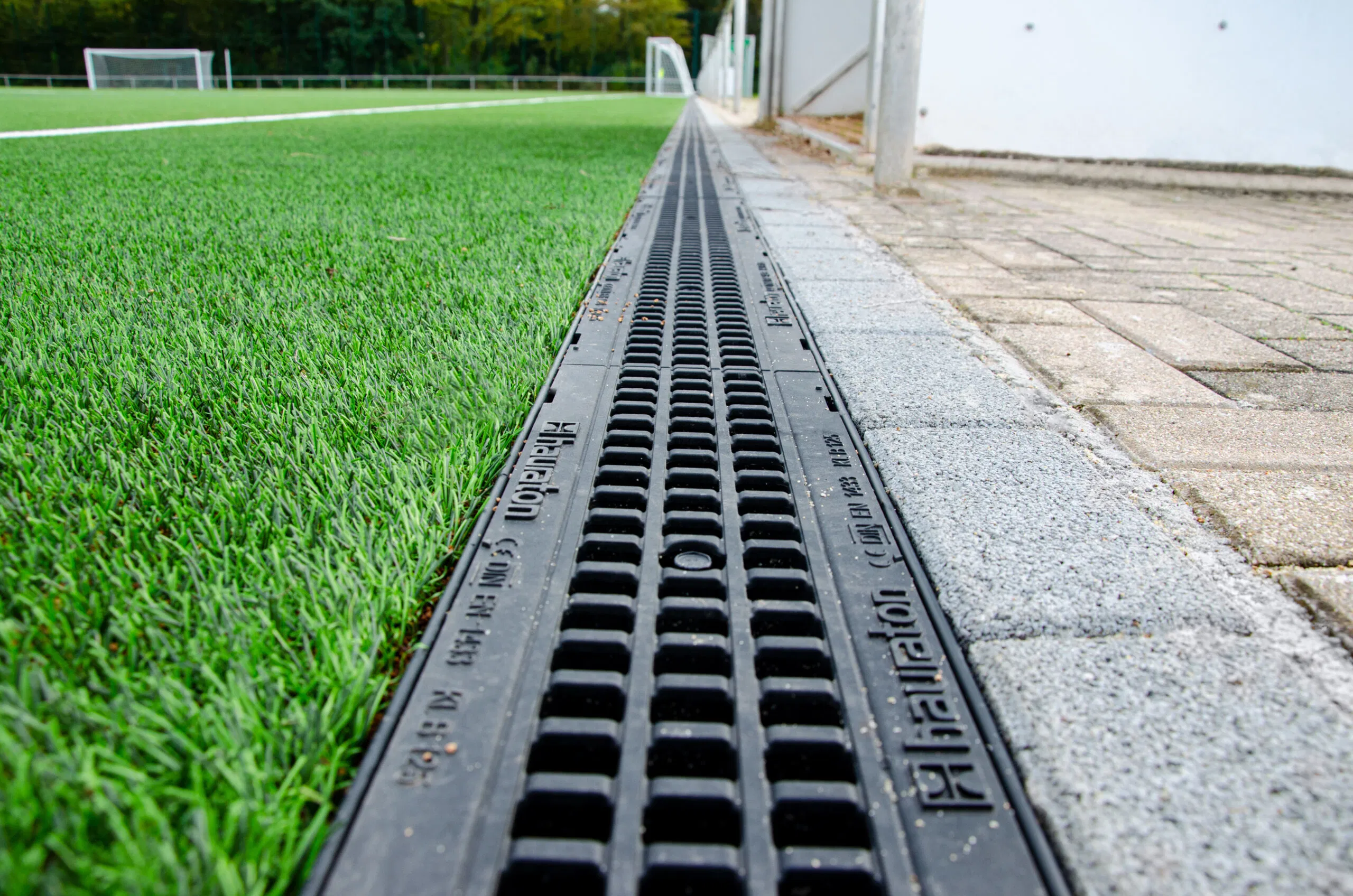
The fundamental challenge with artificial turf in Grand Prairie and the surrounding south metroplex is drainage. Grand Prairie's soil is clay-heavy—a characteristic that runs through most of the south Dallas and Tarrant County geography. Clay soil does not absorb water at rates that work with a generic artificial turf base specification. When North Texas delivers two inches of rain in ninety minutes, a turf installation with inadequate base depth and drainage grading will pool water, compact the base over time, and develop the problems that lead to early replacement.
We design around this. Every installation starts with a soil assessment and drainage evaluation. Base aggregate specifications, drainage gradient, and supplemental drainage infrastructure—French drains, catch basins, channel systems where the site requires them—are determined by the actual conditions of the property, not a standard template. Commercial properties in the I-20 corridor get drainage designs that integrate with their existing site stormwater infrastructure. Residential properties near Joe Pool Lake that sit on clay-heavy lots near the water get base systems engineered for lakeside drainage variability.
The second thing we know about Grand Prairie installations is that commercial and residential properties here have different performance requirements, and we don't treat them the same way. A distribution center entrance on the SH 161 corridor needs commercial-grade fiber density, base material appropriate to heavy pedestrian traffic, and transitions to industrial hardscape. A Mira Lagos backyard for outdoor entertaining needs residential fiber character, pet-compatible drainage if there are dogs, and edge transitions to pool deck or patio pavers. We spec installations to the actual use case.
That specificity extends to our service after installation. We maintain turf systems, replenish infill in depleted zones, treat odor problems in pet areas, and provide drainage retrofits when an existing installation isn't performing correctly. Grand Prairie's commercial corridor means we work with facility managers on recurring maintenance contracts. The lake community residential side means we work with homeowners who want seasonal service visits to keep their outdoor living surfaces performing through the active outdoor calendar.
Our Process
We don't quote from satellite imagery. We walk the property, assess drainage, soil conditions, and grade, and understand how the space is actually used before recommending a system.
Grand Prairie's clay-heavy soil and North Texas rain patterns require specific base engineering. Every installation is designed for the actual conditions of the site, not a generic specification.
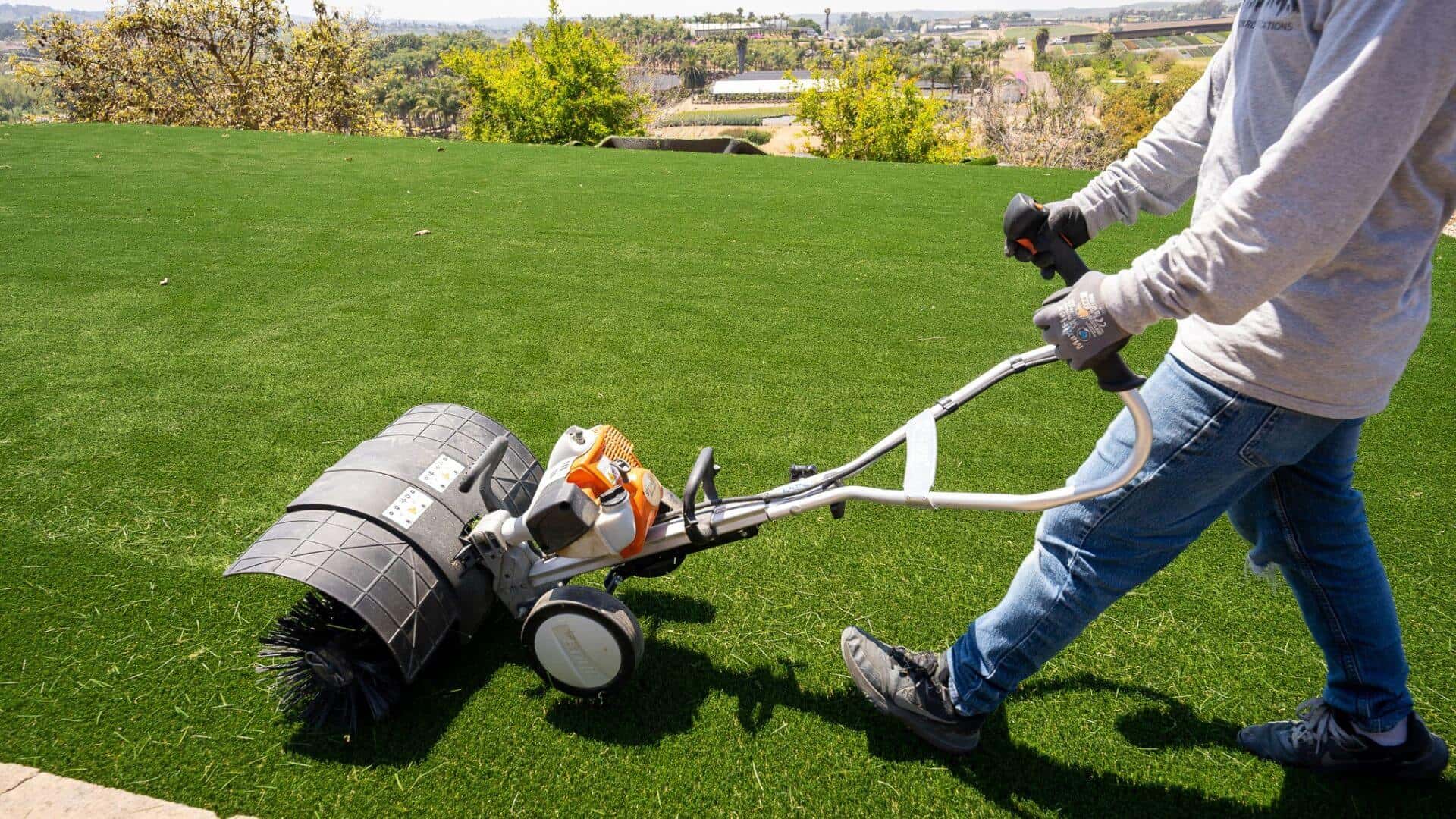
Our crew handles excavation, base compaction, seaming, edge transitions, infill, and grooming. Clean work from start to finish.
Maintenance, infill replenishment, odor treatment, drainage retrofits, and recycling pickup—we're available after the installation, not just before it.
Where We Work
Our service area covers Grand Prairie's commercial corridors and lake communities as our core, with coverage extending across the south DFW geography to serve the full range of clients who call us from this part of the metroplex.
I-20, I-30, SH 360, SH 161, Great Southwest Industrial District
Mira Lagos, Grand Peninsula, Lake Ridge, Joe Pool Lake area
Westchester Park, Dalworth, Lake Crest area, Cedar Hill
Mansfield, Midlothian, Duncanville, DeSoto, Lancaster, Red Oak, Waxahachie
Why Property Owners Call Us
Grand Prairie's industrial and commercial corridor creates a customer base that values operational efficiency and clear communication. Facility managers running distribution centers on the SH 161 corridor don't have time for landscaping vendors who miss schedules or deliver unclear scopes. We operate the way commercial clients expect: site walk, clear proposal, scheduled installation, clean project handoff.
The Joe Pool Lake community side of our work is different in character—homeowners investing in outdoor living near the water want a partner who understands the specific conditions of lakeside properties, not a one-size-fits-all installation crew. We've built enough installations in Mira Lagos, Grand Peninsula, and the lake-adjacent neighborhoods to understand what these properties need and deliver accordingly.